Yogendra Yadav Questions Sonam Wangchuk's Decision to Break Hunger Strike
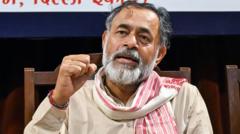
Political activist Yogendra Yadav has questioned the necessity of activist Sonam Wangchuk accepting a glass of water from a minister to end his hunger strike. Yadav raised this point while discussing the broader implications of the protest, suggesting it might have been limited to demanding a minister's resignation. He pondered whether the movement's objectives extended beyond this singular demand or if it had a wider impact on the political landscape, influencing both the ruling government and the opposition parties. The interview implies a strategic discussion around the effectiveness and ultimate goals of such protest actions. Yadav's comments suggest a debate about the symbolic gestures made during protests and their potential to dilute or redefine the movement's core message. The context implies that the protest, led by Wangchuk, had garnered significant attention and was being analyzed for its political ramifications.
The interaction between activists and government officials during protest actions often presents complex symbolic dynamics. Accepting aid from a minister, while potentially signaling de-escalation or a willingness to engage, can also be interpreted as a compromise that might dilute the protest's original message or leverage. This situation highlights the ongoing tension between direct action and institutional engagement in political advocacy. Future movements may need to carefully consider the optics and strategic implications of such interactions to maintain public perception and achieve their stated objectives, particularly in an era where narrative control is paramount.
AI-generated to prompt reflection — not editorial opinion, not advice, not a statement of fact. How this works.