Young Brazilians use AI but feel unprepared, Espro survey reveals
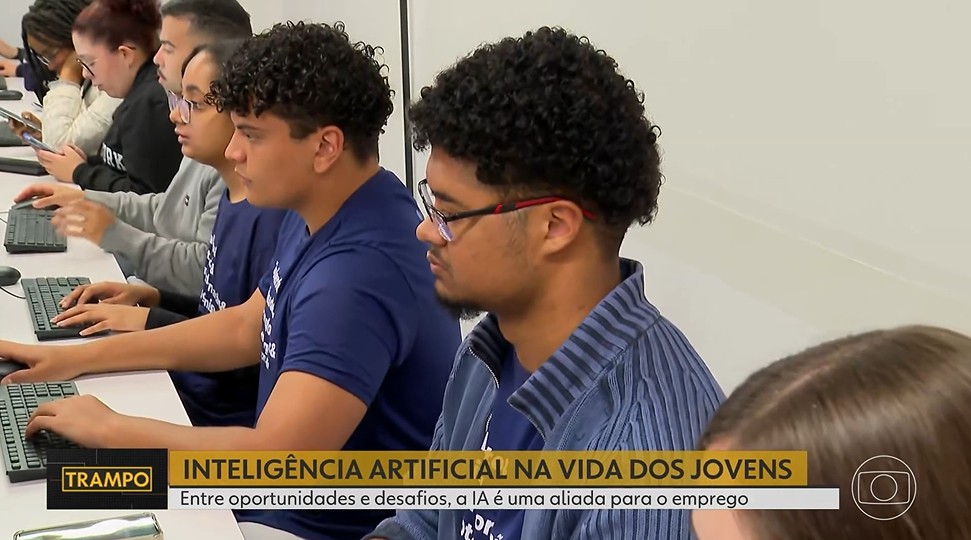
A recent survey conducted by Espro, a non-profit organization focused on youth employment, indicates that while young people in São Paulo, Brazil, are increasingly integrating artificial intelligence into their daily lives, they feel a significant lack of adequate preparation to use these tools effectively. The study surveyed 1,874 young individuals and found that most view AI as a valuable asset for securing employment. However, a substantial portion expressed a need for more guidance and formal training on how to leverage AI technologies. Many users, like university student Luiz Felipe Dias, employ AI for academic research, essay writing, and professional tasks such as logistics management. Graphic design student Melissa Eugênio highlighted the necessity of verifying AI-generated information, stating she cannot rely on it 100% due to potential inaccuracies and the unknown origin of data. Espro's findings reveal that over a third of respondents feel they lack sufficient guidance, with only one in three believing they have received adequate preparation, while 15% find current education lacking. University student Gustavo Quirino noted that formal training exposed the limitations in his previous AI usage, revealing significant room for improvement. Alessandro Saade, Espro's executive director, emphasized that a key positive finding is that young people do not perceive AI as a threat, underscoring the importance of teaching ethical and responsible AI use. The research also detailed AI's prevalence, with 49% using it for basic tasks and 35% using it frequently, while 10% were unsure and 6% reported not using it at all. Tiago de Oliveira, who now develops AI solutions, believes AI is a powerful ally that complements human effort, enhancing productivity and results rather than replacing individuals.
This survey highlights a critical societal challenge in the AI era: the growing gap between technology adoption and user preparedness. While young Brazilians embrace AI as a productivity tool and career enabler, their perceived lack of formal training suggests a systemic deficit in educational curricula and workforce development programs. This disconnect could lead to suboptimal AI utilization, the propagation of misinformation, and an underestimation of AI's complex capabilities and ethical considerations. Future-proofing the workforce requires proactive integration of AI literacy, critical thinking skills, and ethical frameworks into education, ensuring individuals can navigate the evolving technological landscape responsibly and effectively, thereby maximizing AI's benefits while mitigating its risks.
AI-generated to prompt reflection — not editorial opinion, not advice, not a statement of fact. How this works.