Young villagers in Natore repair their own road due to lack of development
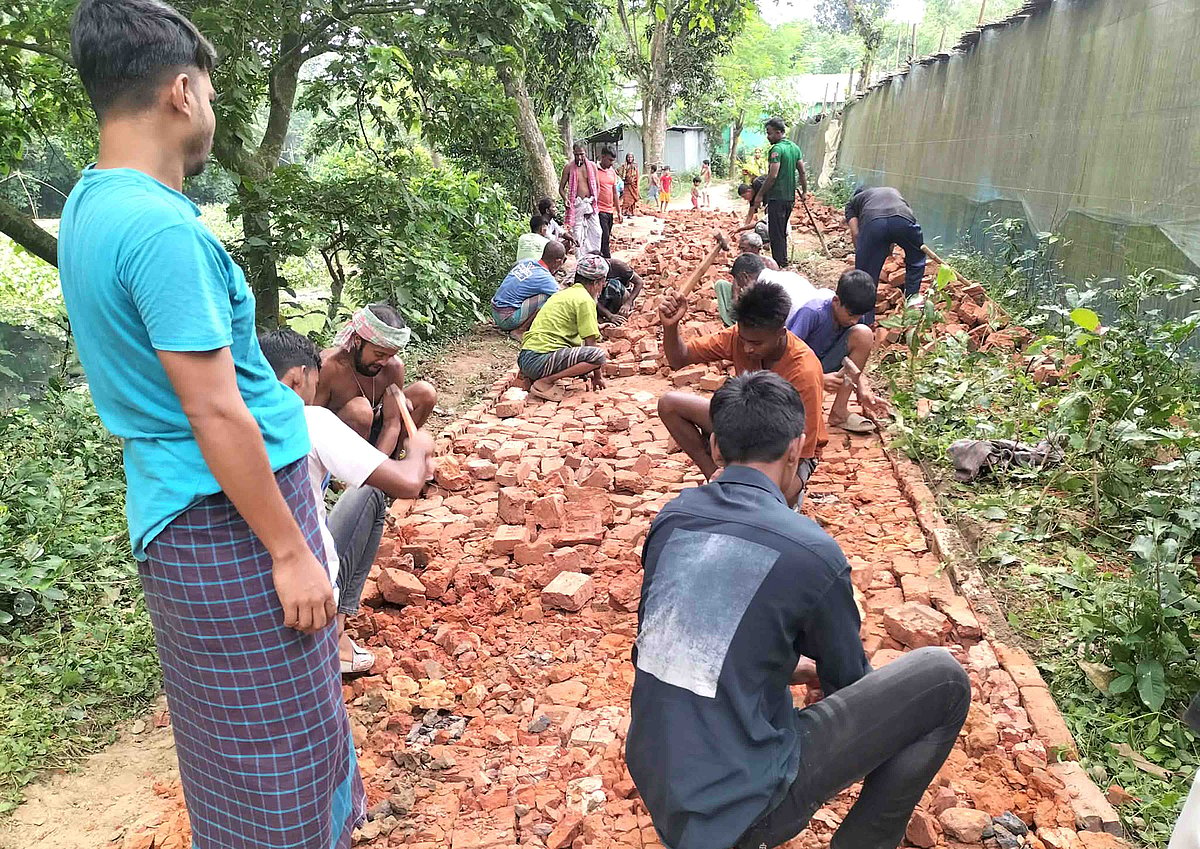
In Lalmonipur village, Natore Sadar Upazila, approximately fifty young men have taken the initiative to repair their village's sole unpaved road, which has been impassable for years. The road, crossing the Narad River via a bamboo bridge, becomes particularly difficult to traverse during the rainy season, forcing residents to walk to the district town. Despite repeated promises from candidates during elections to pave the road, these pledges have never been fulfilled. Frustrated by the lack of development, the young villagers decided to take matters into their own hands. Starting last Monday, they began a self-funded repair effort, collecting donations from households to purchase bricks, sand, and gravel. The work involves laying these materials to make the road usable, with the aim of completing the entire stretch by Wednesday evening. The initiative is driven by a desire to overcome false assurances and create a functional road through collective effort and personal expense. One of the organizers, Zahid Mehdi, expressed hope for the construction of a permanent bridge over the river, in addition to the road repairs. The Upazila Executive Officer, Md. Azahar Ali, has assured that the road and bridge construction in the village will be prioritized by the government.
This situation highlights a common governance challenge where essential infrastructure development lags behind community needs, leading citizens to undertake self-help initiatives. The villagers' actions, while commendable for their resourcefulness and community spirit, underscore a potential disconnect between local governance promises and actual service delivery. The reliance on voluntary labor and personal funds for public works suggests a gap in public service provision or bureaucratic delays. Looking ahead, this event prompts consideration of how to foster more responsive and efficient public infrastructure planning and execution, ensuring that citizen expectations are met through established governmental channels rather than necessitating community-led repairs. The involvement of local administration officials in promising future action indicates a potential for improved collaboration, but sustained follow-through will be crucial to rebuild trust and prevent future reliance on such ad-hoc solutions.
AI-generated to prompt reflection — not editorial opinion, not advice, not a statement of fact. How this works.