Youth Seeking Future Abroad: Choice or Necessity?
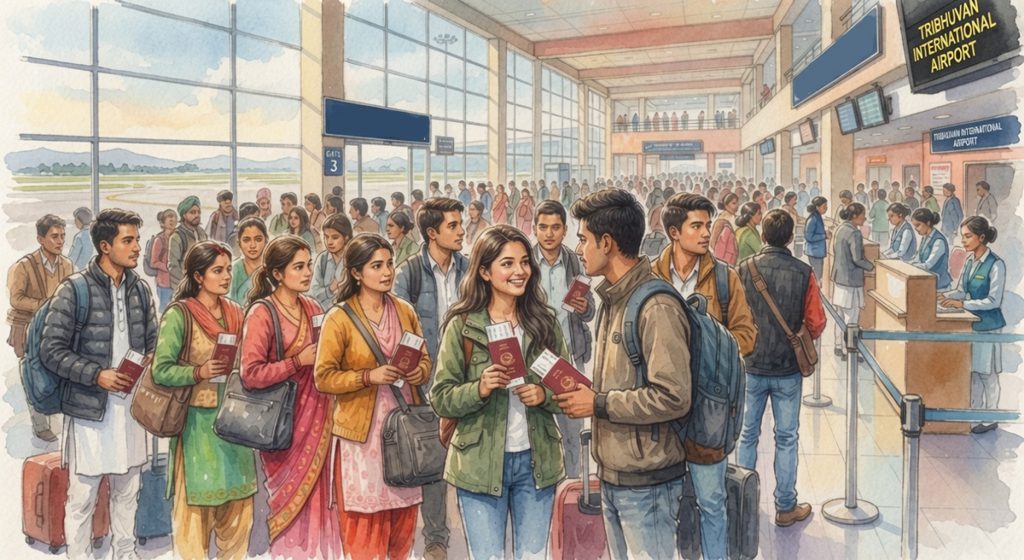
Universities in Nepal are facing the prospect of empty classrooms, indicating a potential decline in enrollment or engagement. Simultaneously, language proficiency testing centers and the Department of Passports are overwhelmed with applicants, suggesting a surge in demand for overseas opportunities. This stark contrast highlights a significant trend where the younger generation appears to be prioritizing foreign prospects over domestic educational and career paths. The situation raises questions about the underlying reasons driving this migration, whether it stems from personal aspirations for a better life abroad or is a result of compelling circumstances within Nepal. The overwhelming numbers at passport offices and language centers point towards a strong push factor, making it difficult to ascertain if this is a voluntary choice or a reluctant necessity for many young Nepalis.
The observed phenomenon of Nepali youth flocking to language centers and passport departments while universities face potential closure suggests a significant disconnect between domestic opportunities and the aspirations of the younger generation. This trend likely reflects a complex interplay of economic, social, and educational factors driving migration. From an economic perspective, perceived higher earning potential and better career prospects abroad act as strong pull factors. Socially, the desire for improved living standards and access to global networks may also play a role. Educationally, the quality and relevance of domestic higher education might be questioned, leading students to seek international qualifications. This dynamic presents a systemic challenge for Nepal, requiring a comprehensive strategy to foster domestic growth, enhance educational quality, and create a more attractive environment for its youth to build their futures within the country. The next decade's technological advancements and global interconnectedness will likely amplify these trends, making it crucial for Nepal to adapt proactively.
AI-generated to prompt reflection — not editorial opinion, not advice, not a statement of fact. How this works.