Zelensky Triggers Political Crisis with Ukrainian Military Reshuffle
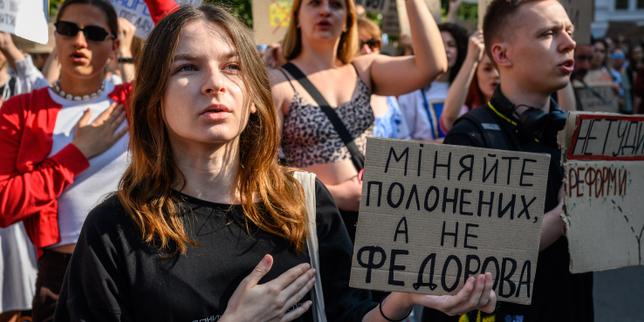
Ukrainian President Volodymyr Zelensky has initiated a significant political crisis by appointing Oleksandr Syrsky as the new Commander-in-Chief of the Armed Forces. This decision has reportedly bypassed Defense Minister Mykhaïlo Fedorov, leading to considerable opposition. The move signals a major shift in Ukraine's military leadership during a critical period of the ongoing conflict. Zelensky's choice to elevate Syrsky, a seasoned commander, over other potential candidates suggests a strategic pivot in military strategy or command structure. The resulting protests and expressions of dissent highlight internal divisions within Ukraine's political and military establishment. The full implications of this reshuffle on the war effort and domestic stability remain to be seen. However, the immediate aftermath indicates a challenging period for President Zelensky's administration as it navigates this internal political turbulence.
President Zelensky's decision to replace key military leadership, particularly by elevating Oleksandr Syrsky, introduces a significant variable into Ukraine's strategic calculus. This reshuffle, occurring amidst ongoing conflict, could reflect a response to battlefield dynamics or a broader restructuring of military command to enhance operational efficiency. The resulting political opposition suggests potential friction between civilian oversight and military command, or differing strategic visions within the leadership. Examining the incentive structures driving this change, such as the need for renewed military momentum or a recalibration of leadership effectiveness, is crucial. The long-term impact will depend on how effectively the new command integrates with existing governance structures and maintains national unity under pressure.
AI-generated to prompt reflection — not editorial opinion, not advice, not a statement of fact. How this works.