Zelenskyy: Long-Range Sanctions Aim to Make Russia's Occupation Unaffordable
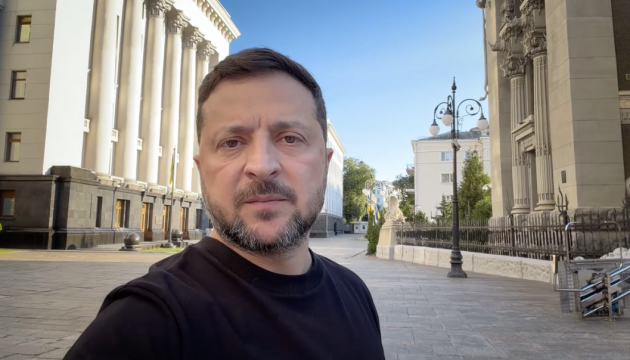
Ukrainian President Volodymyr Zelenskyy stated that the objective of implementing long-range sanctions against Russia is to render the continuation of its occupation efforts prohibitively expensive for the aggressors. The goal is to create economic conditions that make further territorial occupation unsustainable for Russia. These sanctions are designed to target key sectors and financial flows, thereby increasing the cost of maintaining military presence and control in occupied territories. Zelenskyy emphasized that the economic pressure is a critical component of Ukraine's strategy to repel the invasion and restore its territorial integrity. The effectiveness of these sanctions hinges on their breadth, depth, and consistent enforcement, aiming to isolate Russia economically and limit its capacity to fund its military operations. Ultimately, the aim is to compel Russia to cease its aggression by making the price of continued occupation too high to bear.
The stated objective of long-range sanctions is to impose a prohibitive economic cost on Russia's occupation efforts. This strategy leverages economic pressure as a non-military tool to influence geopolitical outcomes. The effectiveness of such sanctions often depends on global coordination, the ability to circumvent countermeasures, and the resilience of the targeted economy. From a systems perspective, the application of sanctions highlights the interconnectedness of global finance and the potential for economic statecraft to shape international relations. Looking ahead, the long-term impact will likely involve assessing the adaptability of Russia's economic model and the evolving landscape of international trade and financial flows in response to sustained external pressure.
AI-generated to prompt reflection — not editorial opinion, not advice, not a statement of fact. How this works.