Zeppelin Collects Climate, Wind, and Air Quality Data
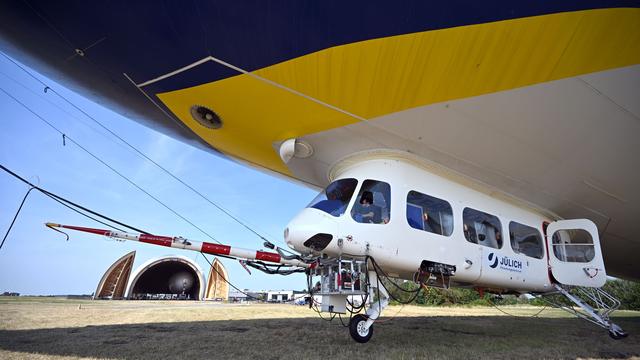
A Zeppelin airship is being utilized by scientists to gather crucial data on climate, wind patterns, and air quality. This innovative approach leverages the unique capabilities of the airship for atmospheric research. The collected information is expected to provide valuable insights into environmental conditions and changes over time. This project highlights a novel method for environmental monitoring, moving beyond traditional ground-based or satellite observation techniques. The data gathered will contribute to a better understanding of complex atmospheric processes. Researchers aim to use these findings to inform climate models and air pollution studies. The Zeppelin's ability to maintain a stable position and cover large areas makes it an ideal platform for this type of data collection. The initiative represents a significant step forward in atmospheric science research.
The deployment of a Zeppelin for atmospheric data collection signifies a creative approach to environmental monitoring, potentially offering advantages in spatial coverage and data stability over conventional methods. This strategy addresses the increasing need for granular, real-time environmental data to inform climate change mitigation and air quality management policies. The system's effectiveness will depend on the cost-efficiency and scalability compared to existing technologies, as well as the integration of the collected data into actionable scientific models. Future applications may explore further integration with AI for predictive environmental analysis, optimizing resource allocation for research and policy development.
AI-generated to prompt reflection — not editorial opinion, not advice, not a statement of fact. How this works.
