Zlatan Ibrahimović criticizes Cristiano Ronaldo's influence on Portugal's World Cup 2026 campaign
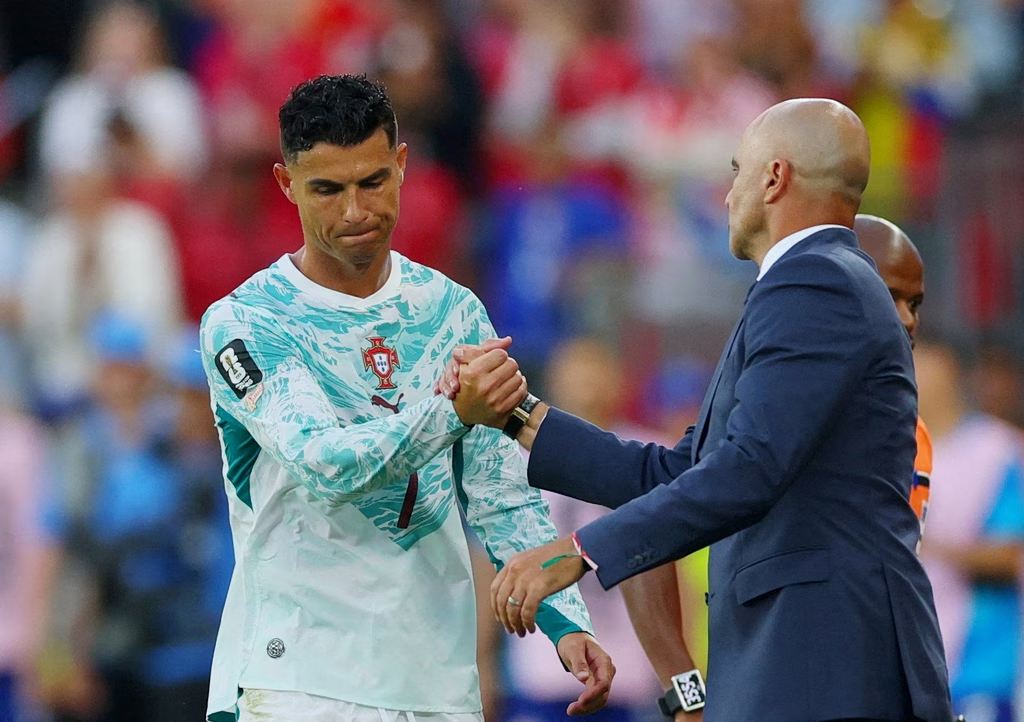
Zlatan Ibrahimović has launched a strong criticism of Cristiano Ronaldo, questioning his place in the Portugal starting lineup and the team's overall performance in the 2026 World Cup. Despite Portugal securing a spot in the Round of 16 after defeating Croatia, Ibrahimović, speaking as a commentator for Fox Sports, suggested that Ronaldo's ego is holding the Portuguese team hostage. The former Swedish striker implied that Ronaldo's presence and influence might be detrimental to Portugal's strategic gameplay and team cohesion. Ibrahimović's comments highlight a perceived tension between Ronaldo's individual stature and the collective needs of the national team. The analysis comes as Portugal navigates the crucial knockout stages of the tournament. The Swedish veteran's remarks have sparked debate about leadership and team dynamics in international football. His perspective suggests a belief that Portugal could potentially perform better without the perceived burden of Ronaldo's star power. This criticism, coming from a prominent football figure, adds another layer to the ongoing discussion about Ronaldo's role in the twilight of his career and its impact on his national team.
Zlatan Ibrahimović's critique of Cristiano Ronaldo's impact on the Portuguese national team raises questions about the dynamic between individual player influence and collective team performance, particularly in high-stakes tournaments like the 2026 World Cup. This situation highlights a common challenge in elite sports: balancing the contributions of legendary, high-profile athletes with the strategic needs and evolving capabilities of the entire squad. From a systems perspective, the incentive structures for both players and coaches can become complex when a team's success is heavily intertwined with the presence of a singular, dominant personality. The long-term sustainability of such a model often depends on the adaptability of the team and the player to changing game dynamics and the emergence of new talent. Evaluating this situation requires considering how team management and tactical approaches can optimize performance by fostering an environment where both individual brilliance and cohesive team play can thrive, especially as the sport continues its rapid evolution in the coming decade.
AI-generated to prompt reflection — not editorial opinion, not advice, not a statement of fact. How this works.