Zubaida Rahman Urges Medical Students to Dedicate Themselves to National Service
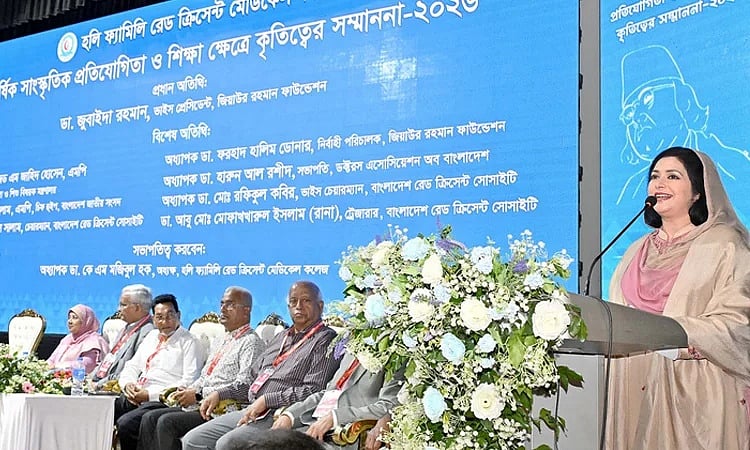
Zubaida Rahman, Vice President of the Ziaur Rahman Foundation and wife of the Prime Minister, called upon medical students to embrace humanitarian values and patriotism alongside professional expertise in their service to the nation. Speaking at the annual cultural program and awards ceremony for academic excellence at Holy Family Red Crescent Hospital and College Auditorium in Dhaka on Thursday, July 23, 2026, she particularly emphasized the crucial role of the new generation of doctors in ensuring healthcare access for rural populations. Rahman congratulated the honored students for their achievements and praised their continued engagement in cultural activities despite rigorous academic demands, presenting them with their awards. She highlighted that while medical students are among the nation's brightest, it is their compassionate approach that truly defines a doctor's success in serving the sick. Rahman expressed hope that these graduates, after pursuing further studies and training abroad, would return to serve their communities and provide medical care during times of crisis. She pointed to concerning statistics in Bangladesh's health sector, noting only 0.83 doctors per 1,000 people, with each doctor serving approximately 1,200 to 1,800 patients, a situation exacerbated in rural areas. Furthermore, she stated that 70-75% of doctors work in urban areas, while 78% of the population resides in villages, and the number of nurses falls below WHO standards. Rahman also noted the low ratio of government doctors contributes to high healthcare costs and poverty. She believes that a commitment to national service from the outset of their careers can change this landscape. Ultimately, she envisions a healthcare system where no villager dies due to lack of treatment, and no mother or newborn succumbs to preventable causes, underscoring the importance of universal health and the role of future doctors in achieving this goal.
The call for medical professionals to prioritize rural healthcare and national service highlights a persistent challenge in many developing nations: the equitable distribution of medical resources and personnel. While encouraging dedication and humanitarianism is vital, systemic issues such as inadequate infrastructure, limited government investment in rural health facilities, and competitive urban job markets often influence career choices. Future policy discussions might explore incentives for rural practice, enhanced public health education, and innovative healthcare delivery models to address these disparities. Examining the long-term sustainability of such a commitment requires understanding the interplay between individual aspirations, societal needs, and the economic realities faced by healthcare providers.
AI-generated to prompt reflection — not editorial opinion, not advice, not a statement of fact. How this works.